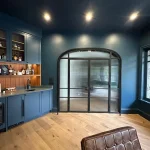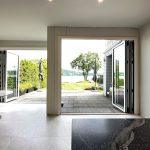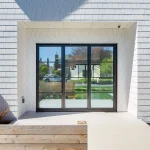

Understanding the different types of sliding doors is essential when planning a renovation or new build in Vancouver. Each system offers a different balance of space efficiency, performance, and design flexibility, depending on how your home is used.
From compact condos in Burnaby to open layouts in North Vancouver, the right sliding system can completely change how a space feels and functions.
This guide breaks down the main types of sliding doors and helps you understand which option actually fits your home—not just in style, but in everyday use.
Types of Sliding Doors
Modern homes in Vancouver increasingly rely on different types of sliding doors to create open layouts, improve light flow, and maximize usable space without compromising design.
Sliding doors come in several designs, each created to solve a different challenge. Some maximize natural light, others save valuable floor space, while premium systems are designed to create wide, uninterrupted openings between indoor and outdoor living areas.
Understanding how each type works is the easiest way to narrow down your options before considering materials, finishes, or custom features.
Standard Sliding Doors
Standard sliding doors are the most common style found in homes today. They typically feature one fixed panel and one movable panel that glides smoothly along a track, making them an excellent choice where a traditional swinging door would take up unnecessary space.
Because they combine functionality with a clean, modern appearance, they’re widely used for patios, balconies, and interior transitions in both houses and condos throughout Vancouver.
Multi-Slide Doors
Multi-slide doors use three or more panels that stack or slide together to create much larger openings than a standard sliding system. They’re a popular choice for contemporary homes where homeowners want to blur the line between indoor and outdoor living.
With their expansive glass panels and minimal framing, multi-slide systems maximize natural light while creating a dramatic architectural feature.
Lift-and-Slide Doors
Lift-and-slide doors are engineered for larger, heavier glass panels. When the handle is turned, the door lifts slightly off its seals, allowing it to glide with minimal effort before lowering back into place to create a secure, weather-resistant seal.
They’re often selected for custom homes where smooth operation, premium performance, and exceptional insulation are priorities.
Pocket Sliding Doors
Pocket doors disappear completely inside the wall when opened, making them one of the most space-efficient solutions available.
They’re particularly useful for bedrooms, bathrooms, home offices, and smaller living spaces where every square foot matters. Because the door is concealed within the wall cavity, pocket doors also create a clean, minimalist appearance that complements many modern interiors.
Barn Sliding Doors
Barn doors slide along an exposed track mounted above the opening, turning the hardware into part of the overall design. While originally inspired by rustic architecture, today’s barn doors are available in everything from classic wood finishes to sleek contemporary styles.
They’re best suited for interior spaces where visual impact and space-saving are more important than acoustic or weather sealing.
Why Sliding Glass Doors Are So Popular
Sliding glass doors have become one of the most common choices in modern home design—not just because they look good, but because they change how a space feels and functions.
By using large glass panels, they allow natural light to move freely through the home, making smaller spaces feel more open and connected. This is especially valuable in Vancouver, where many homes and condos are designed to maximize light and efficient use of space.
Depending on the layout, sliding glass doors can be used as standard patio systems, interior room dividers, or premium architectural features in open-concept spaces.
Glass sliding doors are especially popular in modern Vancouver homes because they maximize natural light while maintaining a clean, minimal frame design.
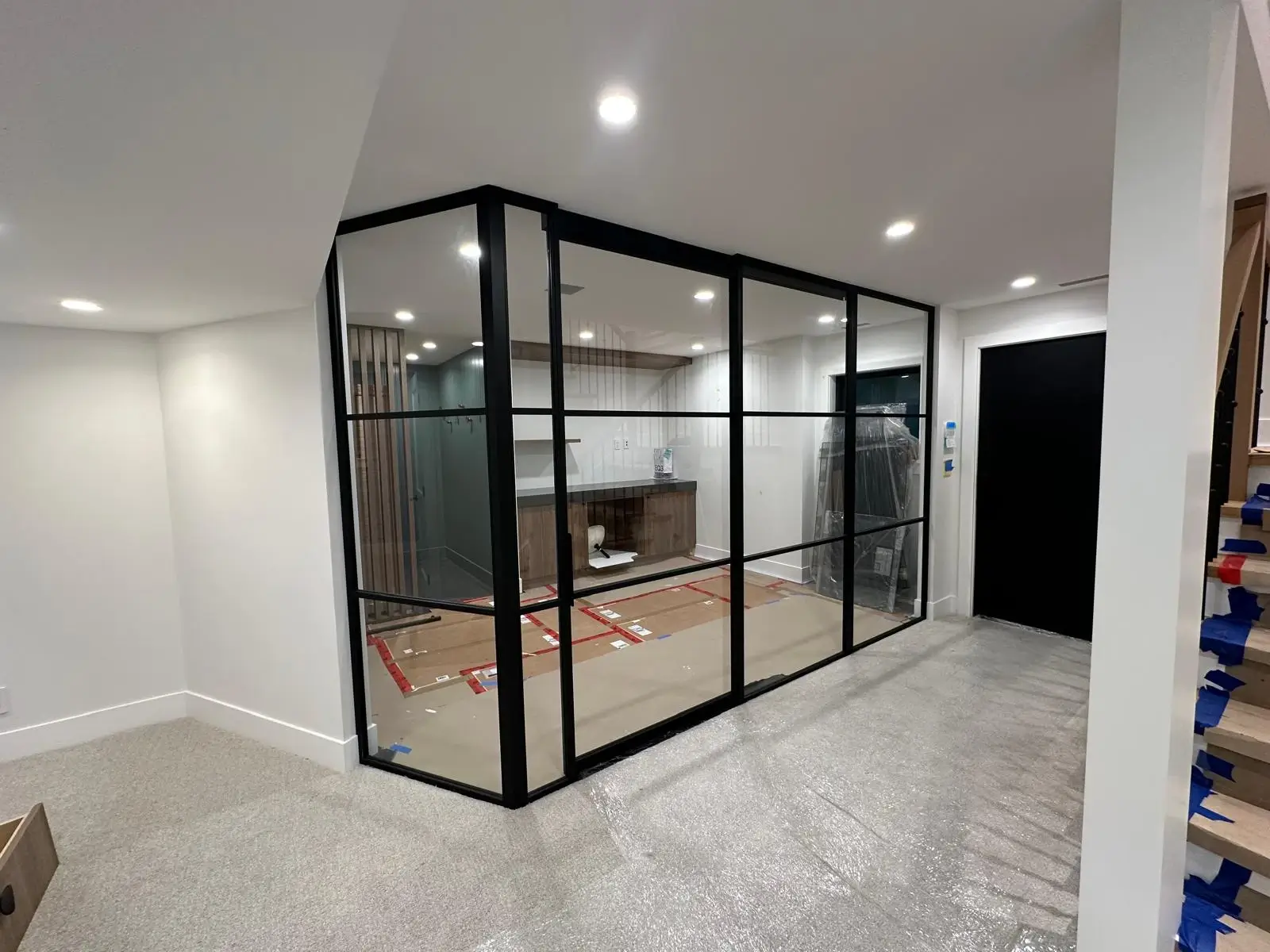
For interior layouts, many homeowners choose sliding glass door room dividers to maintain brightness while creating flexible separation between rooms.
What Sliding Door Materials Should You Choose?
Choosing the right material is one of the most important decisions when selecting sliding doors. In the Lower Mainland, it’s not just about appearance—humidity, rain exposure, and temperature changes all affect long-term performance.
Vinyl Sliding Doors
Vinyl is the most commonly used option in residential projects across Vancouver because it is cost-effective, low-maintenance, and performs well in wet climates. It doesn’t rust or rot, making it a practical choice for everyday homes.
It’s a strong option for homeowners who want reliability without ongoing upkeep, especially in areas with frequent rain and moisture exposure.
Fiberglass Sliding Doors
Fiberglass sits at the premium end of the spectrum. It is extremely stable in changing weather conditions and resists warping, which makes it ideal for long-term performance in coastal environments.
Many homeowners choose fiberglass when energy efficiency and durability are top priorities, especially for larger openings or higher-end renovations.
Aluminum Sliding Doors
Aluminum is preferred in modern architectural designs where slim frames and large glass panels are important. It allows for clean sightlines and a minimal aesthetic that fits contemporary homes and condos.
However, in BC climates, it should always include a thermal break to reduce heat loss and condensation during colder months.
Glass Performance & Energy Efficiency
Glass plays a major role in both comfort and efficiency. In Vancouver, dual-pane glass is the baseline standard, while triple-pane glass is often used in homes near busy streets or exposed coastal areas.
Low-E coatings are commonly added to improve insulation and reduce UV exposure without blocking natural light.
For a deeper breakdown of performance ratings and energy savings, see our guide on energy-efficient sliding glass doors.
What to Consider Before Choosing Sliding Doors in Vancouver
Climate & Moisture Resistance
Vancouver’s wet climate plays a major role in how sliding doors perform over time. Constant rain and humidity can affect seals, tracks, and frame materials if the wrong system is chosen.
This is why materials like fiberglass and properly treated aluminum are often preferred in coastal areas.
Space & Layout Constraints
Not every home has the same layout flexibility. In condos and older homes, wall structure and floor space often determine whether a standard sliding system, pocket door, or fixed-panel design makes sense.
This factor usually eliminates options faster than style preferences do.
Security & Locking Systems
Sliding doors are often large glass surfaces, so security becomes an important consideration. Multi-point locking systems, reinforced frames, and impact-resistant glass are commonly recommended for ground-floor installations.
Installation Quality & Long-Term Performance
Installation quality also has a significant impact on the overall project cost. If you’re budgeting for a new patio or sliding door, our guide to glass door replacement costs explains how installation, materials, and customization affect the final price.
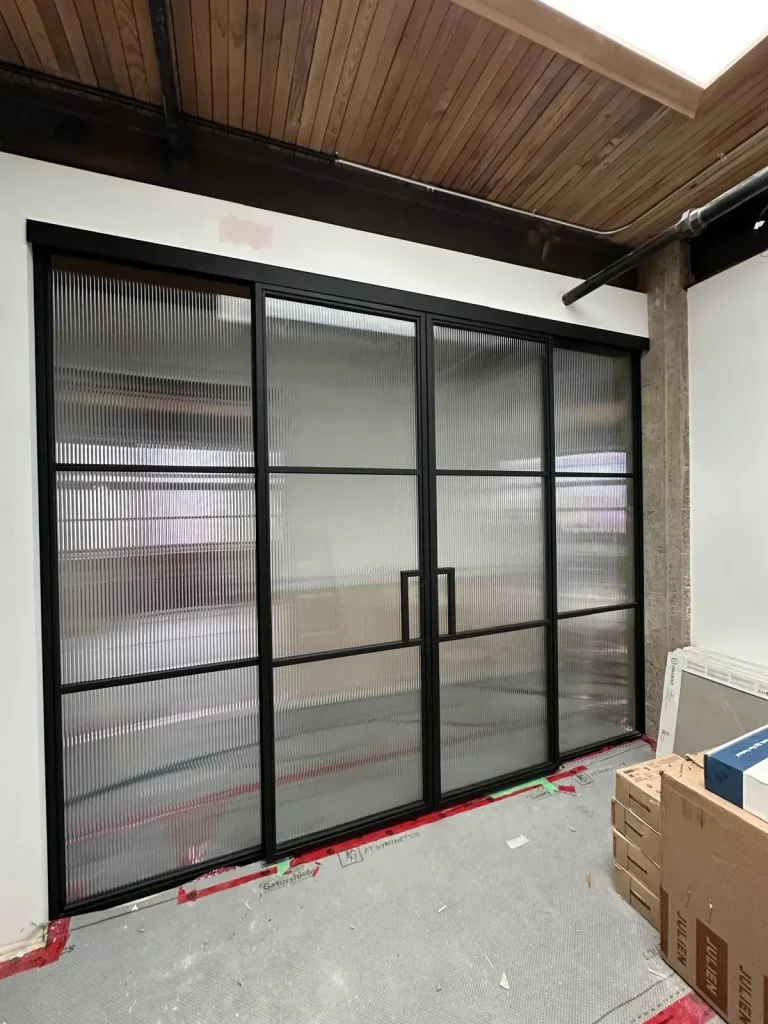
Which Sliding Door Type Is Best for Your Home?
Each sliding door type performs differently depending on the space, material, and level of performance you need.
For example, aluminum works well in standard sliding systems for modern condos, while fiberglass is often preferred in lift-and-slide systems where insulation and airtight sealing matter more in Vancouver’s climate.
This is why the “best” option isn’t universal—it depends on how your home is built and how you plan to use the space.
Sliding Door Types Comparison
| Type | Best Use | Material Fit | Space Impact | Climate Performance | Complexity |
|---|---|---|---|---|---|
| Standard Sliding | Patios, condos | Vinyl, Aluminum | High efficiency | Good | Low |
| Multi-Slide | Large openings, modern homes | Aluminum, Fiberglass | Very open | Moderate | High |
| Pocket Sliding | Interior rooms, tight spaces | Wood, Glass systems | Maximum saving | N/A | High |
| Lift-and-Slide | Premium homes, coastal weather | Fiberglass, Thermally broken Aluminum | High flexibility | Excellent | Very High |
Common Mistakes When Choosing Sliding Doors
Sliding doors may look simple at first glance, but small decisions during selection can have a big impact on long-term performance—especially in a climate like Vancouver’s, where moisture, temperature changes, and daily usage all play a role.
Most issues don’t come from the door itself, but from choosing the wrong system, material, or installation approach for the space.
Ignoring Climate Conditions
One of the most common mistakes is choosing a door based only on appearance without considering local weather conditions.
In coastal areas like Vancouver and Burnaby, constant moisture and seasonal temperature shifts can affect sealing, track performance, and long-term durability if the wrong materials are used.
Fiberglass or properly thermally broken aluminum systems usually perform better in these conditions compared to basic untreated frames.
Choosing Style Over Function
Many homeowners focus heavily on design and forget how the door will actually be used day to day.
For example, multi-slide systems look impressive, but they may not be necessary for smaller openings. On the other hand, standard sliding doors may not provide enough openness for large patio spaces.
The right choice always depends on how the space functions—not just how it looks.
Underestimating the Importance of Installation
Even a high-quality sliding door can underperform if it’s not installed correctly.
In the Lower Mainland, proper sealing, leveling, and moisture protection are critical. Poor installation is one of the leading causes of air leakage, water ingress, and premature wear in sliding door systems.
Ignoring Long-Term Maintenance Needs
Sliding doors operate on tracks and rollers, which naturally collect dust, leaves, and debris over time—especially in Vancouver’s outdoor environments.
Choosing systems that are easy to clean and maintain can significantly extend the lifespan and smooth operation of the door.
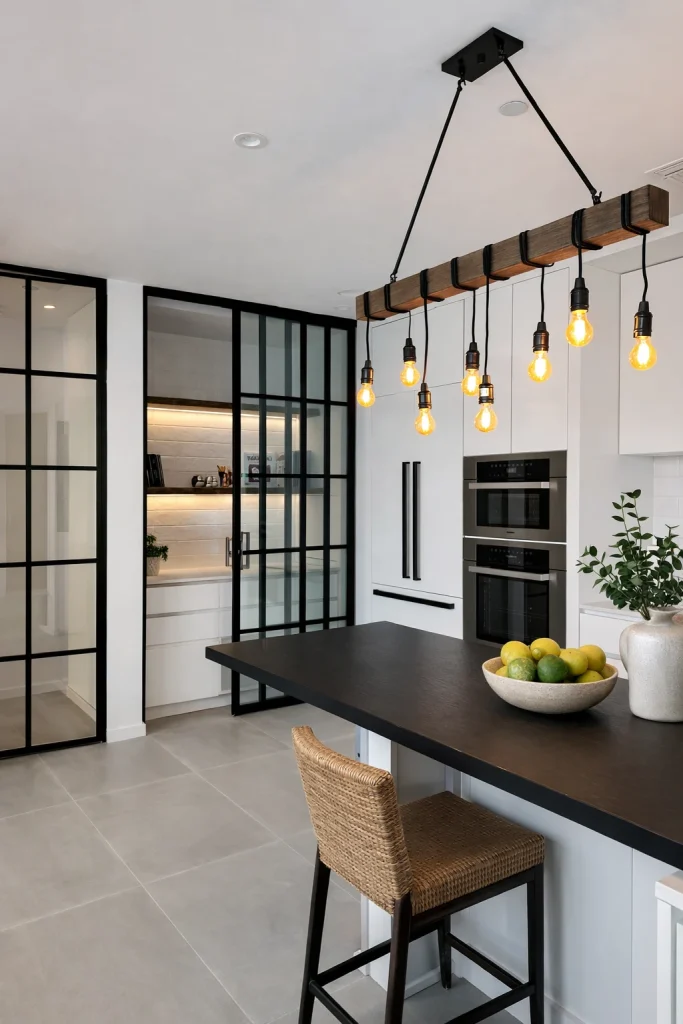
Sliding Door Trends in 2026
Sliding door design in Vancouver is moving toward cleaner aesthetics, better performance, and smarter use of space. Homeowners are no longer choosing doors based only on appearance—they’re looking for systems that improve light, comfort, and long-term energy efficiency.
In Vancouver homes, glass sliding doors continue to be a preferred choice for both interior and exterior applications due to their modern aesthetic and connection to outdoor spaces.
In 2026, the focus is shifting toward minimal frames, higher performance glass, and more flexible interior layouts that suit both modern condos and custom homes across the Lower Mainland.
Ultra-Slim Frames and Minimal Sightlines
One of the strongest trends is the move toward ultra-slim frames that maximize glass surface and natural light.
This design approach is especially popular in Vancouver, where views and daylight are major priorities in both urban condos and suburban homes. Aluminum systems with refined profiles are commonly used to achieve this look.
More Demand for High-Performance Glass
Energy efficiency is becoming just as important as design.
Triple-pane glass, Low-E coatings, and improved insulation systems are now widely requested—especially in homes near busy streets or exposed coastal areas. These upgrades help maintain comfort without sacrificing natural light.
Interior Glass Partitions and Flexible Spaces
Inside the home, there is a growing shift toward flexible layouts rather than fixed walls.
Sliding glass systems and partitions are being used to divide spaces without blocking light, especially in home offices, dining areas, and open-concept living spaces.
Darker Frames and Architectural Contrast
While black frames are already common, 2026 trends are moving toward deeper architectural tones like matte bronze, charcoal, and custom finishes.
These colors are being used to create contrast against light interiors, giving sliding doors a more built-in, architectural appearance rather than a standard fixture look.
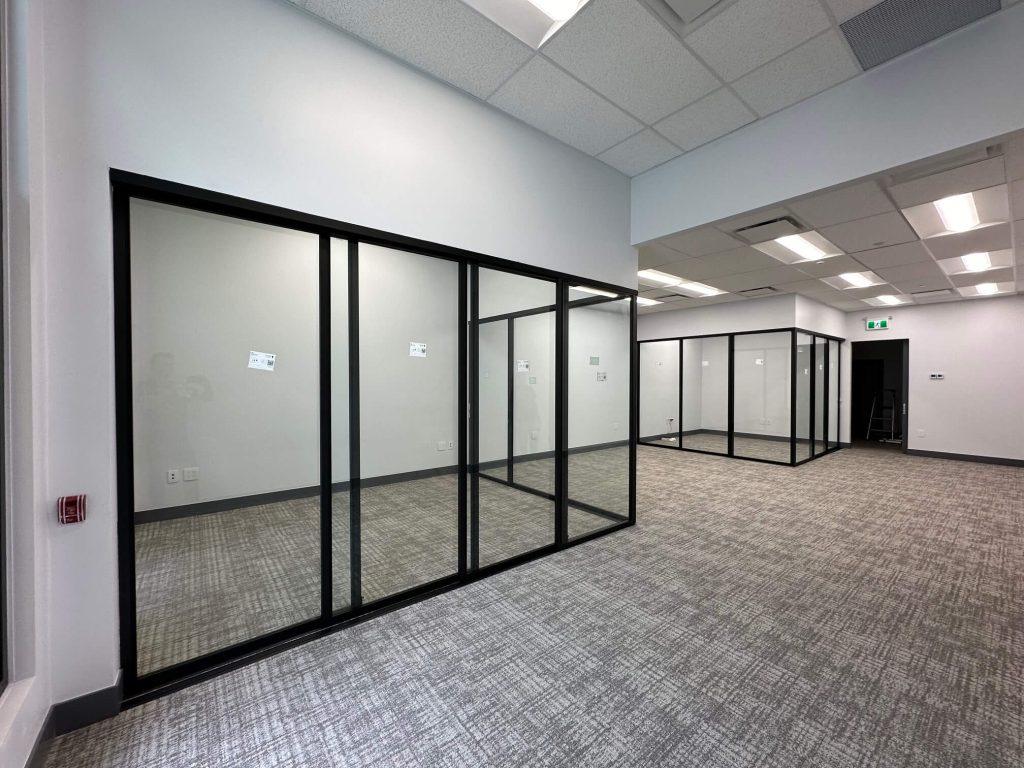
Find the Right Sliding Door for Your Home
Sliding doors aren’t just a design choice—they affect how your home feels, functions, and performs over time.
From materials and systems to layout and climate considerations in Vancouver, the right decision depends on balancing practicality with long-term comfort and design goals.
From standard systems to multi-panel configurations, the different types of sliding doors offer flexible solutions for a wide range of home layouts and performance needs.
The key is not finding the “best” sliding door in general, but the one that fits your space, usage, and expectations.
If you’re still comparing suppliers after deciding on the right sliding door system, our guide to the best sliding door companies can help you evaluate leading manufacturers and installers before making a final decision or, if you’re ready to discuss your own project, request a free quote below and we’ll help you choose the right sliding door system for your home.