

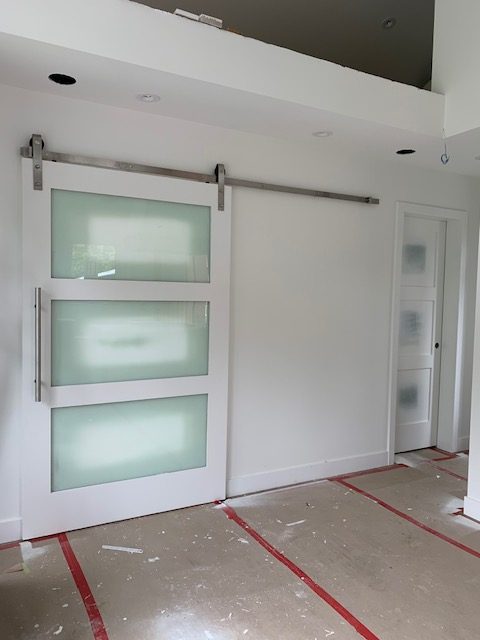
Barn doors are no longer limited to farmhouse-style homes. Today, Canadian homeowners use interior barn doors in modern, traditional, and transitional spaces to add character and create more flexible living areas.
However, a barn door is not the right choice for every doorway. Unlike traditional doors, they require enough wall space, suitable hardware support, and careful consideration of privacy and sound control.
This barn door guide explains the different styles, materials, costs, and installation factors to help you decide whether a sliding barn door is the right fit for your home.
What Is an Interior Barn Door?
An interior barn door is a sliding door system that moves horizontally along a track mounted above the doorway instead of swinging open like a traditional hinged door.
Because it slides along the wall, a barn door does not require the floor clearance needed for a standard swinging door. This makes it a practical option for smaller rooms, tight layouts, or areas where homeowners want to create a stronger design feature.
A typical barn door system includes:
- Door panel: The main door slab, available in materials such as solid wood, engineered wood, or glass.
- Track and rollers: The hardware system that allows the door to move smoothly along the wall.
- Mounting hardware: The brackets and supports that secure the track above the opening.
Although often seen as a design feature, barn doors are simply a type of interior door that slides along a track. They are one of several types of sliding doors available for homes, each offering different benefits depending on the space.
Why Are Barn Doors Popular in Canadian Homes?
Barn doors have become popular because they combine space efficiency with design flexibility. They allow homeowners to separate rooms without sacrificing floor space while adding a distinctive feature to the interior.
In cities such as Vancouver and Burnaby, where maximizing usable space is often a priority, sliding barn doors can be especially useful in smaller layouts.
Beyond their practical benefits, one of the reasons homeowners choose barn doors is the variety of barn door styles available for different interior designs, including:
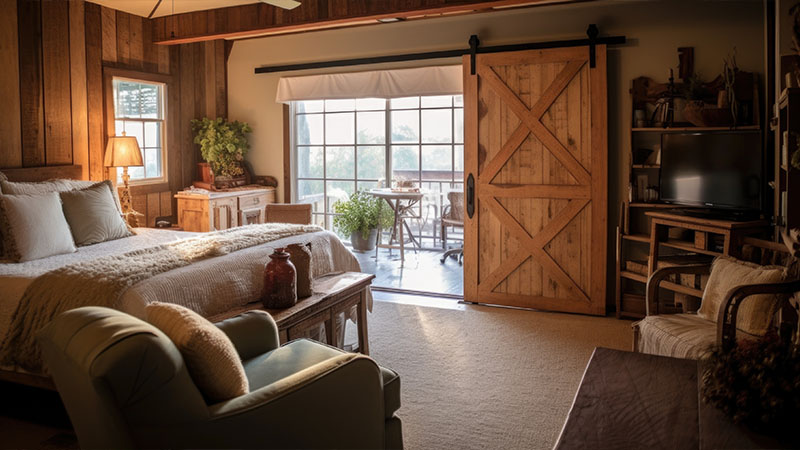
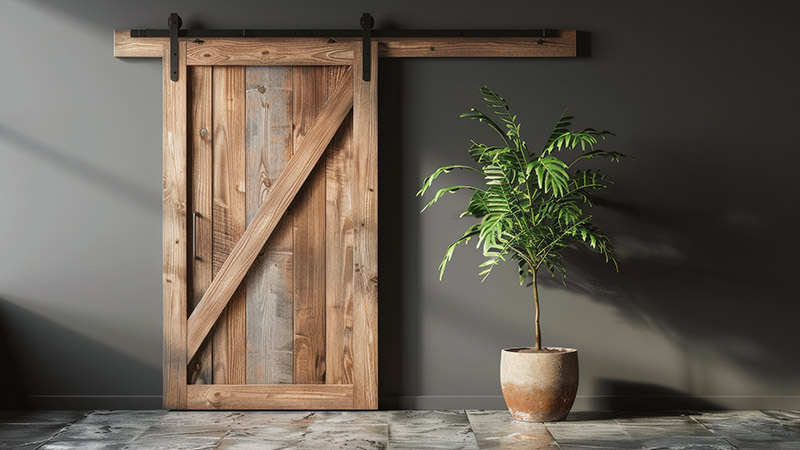
- Traditional wood barn doors: Warm finishes and natural textures that suit classic or transitional homes.
- Modern barn doors: Clean lines, minimal panels, and contemporary hardware for updated interiors.
- Glass barn doors: A popular choice for offices and living spaces where maintaining natural light is important.
Homeowners can also customize their barn door with different materials, stains, paint colours, glass options, hardware finishes, and single or double-door configurations. This allows the door to function as both a practical solution and a design element within the space.
When a Barn Door Makes Sense (and When It Doesn’t)
Barn doors can be an excellent choice for adding character and improving flexibility in certain spaces. However, they are not always the best option. Depending on your design goals and how the room will be used, a modern interior door or another sliding solution may provide better performance.
| A Barn Door Makes Sense When You Want To… | Another Door Style May Be Better When You Need… |
|---|---|
| Save floor space by eliminating the swing area of a traditional door | Better privacy and sound control for bedrooms, bathrooms, or private spaces |
| Add a visible design feature with exposed hardware and unique finishes | A cleaner, more integrated look that blends into the wall and room design |
| Create separation between spaces while maintaining an open feeling | A tighter seal to reduce noise, light gaps, and air movement |
| Add warmth with wood finishes or create a statement piece in your interior | A more contemporary look using options such as steel glass doors or modern glass room dividers |
| Create flexible solutions for offices, closets, pantries, and living areas | A door system that provides stronger insulation, privacy glass options, or more controlled separation |
For many Canadian homes, barn doors work especially well where design flexibility and space-saving are the main priorities. However, modern interior doors — including glass, steel glass, and other contemporary designs — may be a better fit when you want a more refined appearance, improved privacy, or stronger room separation.
How Much Does a Barn Door Cost in Canada?
The cost of a barn door depends on more than the door itself. The material, hardware system, size, and installation requirements all affect the final price.
For most Canadian homes, a professionally installed barn door typically costs $800 to $3,000+. Basic systems with standard materials and hardware are usually on the lower end, while custom designs, larger openings, and premium finishes can increase the investment.
Typical Barn Door Cost Breakdown
| Component | Typical Cost |
|---|---|
| Barn door panel | $300–$1,500+ |
| Hardware system | $150–$1,000+ |
| Professional installation | $300–$800+ |
Actual pricing varies depending on door size, material, hardware quality, wall conditions, and installation requirements.
If you’re deciding between a barn door and a traditional hinged door, our guide to prehung door installation cost explains how installation and pricing differ.
Main Factors That Affect Barn Door Cost
Door Material
The material you choose has one of the biggest impacts on price.
Engineered wood barn doors are often the most affordable option. They provide the appearance of wood while offering good stability and lower material costs.
Solid wood barn doors typically cost more because of their weight, craftsmanship, and natural character. They are a popular choice for homeowners looking for a premium, custom appearance.
Glass barn doors are usually more expensive because they require specialized glass, framing, and compatible hardware. They are often chosen for modern interiors where maintaining natural light is important.
Hardware Quality
The track and roller system affects both the price and long-term performance of a barn door.
Higher-quality hardware typically provides smoother movement, quieter operation, and better durability. Features such as soft-close mechanisms and higher weight-rated tracks can increase the cost but improve everyday use.
Size and Installation Requirements
Standard-size barn doors are usually easier and more affordable to install. Larger openings, double barn doors, or custom designs require more material, stronger hardware, and additional preparation.
Because the track carries the full weight of the door, proper wall support is essential. Some installations may require additional blocking or framing adjustments before the hardware can be safely mounted.
Barn Door vs Modern Interior Door: Which Is Right for Your Home?
The right choice depends on how you use the space. Barn doors are often selected for their design impact and space-saving benefits, while modern interior doors are preferred when privacy, sound control, and a more built-in appearance are priorities.
| Feature | Barn Door | Modern Interior Door |
|---|---|---|
| Space efficiency | Excellent — no swing clearance required | Requires room for door movement |
| Privacy | Moderate — small gaps are common | Better — tighter closure |
| Sound control | Moderate | Better separation between rooms |
| Installation | Requires wall support and track installation | Usually simpler for standard openings |
| Design style | Exposed hardware creates a statement feature | Wide range of contemporary finishes and designs |
If you’re comparing different interior door options as part of a renovation, our guide to interior door replacement cost explains the factors that influence pricing and installation costs.
Choosing the Right Barn Door Material
The material you choose affects the appearance, maintenance, weight, and overall cost of a barn door. The most common options are wood, engineered wood, and glass.
Wood Barn Doors
Wood barn doors remain a popular choice because of their natural character and customization options.
Solid wood doors can create a warm, premium look and work well in farmhouse, traditional, and transitional interiors. They can be customized with different stains, finishes, and panel designs.
However, solid wood doors are heavier and usually require stronger hardware. They may also need more maintenance over time, especially in homes affected by humidity changes.
Engineered Wood Barn Doors
Engineered wood is a practical alternative to solid wood. It provides a similar appearance while usually being more affordable and more stable.
Because it is less affected by seasonal movement, engineered wood can be a good option for homeowners who want the look of wood with easier maintenance.
Glass Barn Doors
Glass barn doors are popular in modern interiors because they allow natural light to move between spaces while still creating separation.
They are commonly used for:
- Home offices
- Living areas
- Studio spaces
- Modern room dividers
Options such as frosted, textured, or privacy glass can provide different levels of visibility while maintaining a contemporary appearance.
If your goal is to separate larger spaces while preserving an open feel, sliding door room dividers may be a better alternative than a single barn door.
Choosing the Right Material
The best material depends on how the door will be used.
If appearance and natural character are the priority, wood may be the preferred choice. If easier maintenance and stability are more important, engineered materials can be a practical solution. For homeowners looking to preserve light and create a contemporary feel, glass barn doors offer a unique alternative.
Regardless of material, choosing a quality track system and proper installation is just as important as selecting the door itself.
What Size Barn Door Do You Need?
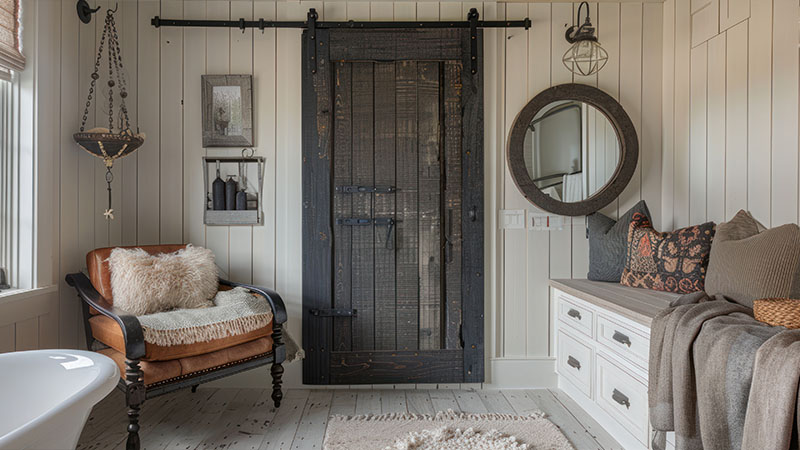
Choosing the right barn door size involves more than matching the doorway opening. Unlike a traditional door that sits inside the frame, a barn door hangs outside the opening and slides along the wall.
Because of this, the door usually needs additional width to provide proper coverage when closed.
How Much Overlap Does a Barn Door Need?
As a general guideline:
- A 36-inch doorway opening often requires a barn door around 42 inches wide
- A 30-inch doorway opening may require a door around 36 inches wide
The exact size depends on the door design, hardware system, and how much coverage you want.
Check Wall Space Before Installation
Before choosing a barn door, make sure there is enough clear wall space for the door to slide completely open.
Consider:
- Nearby walls or corners
- Light switches and outlets
- Furniture placement
- Baseboards or trim
Larger openings may require double barn doors, stronger hardware, and additional wall support.
Things to Consider Before Installing a Barn Door
Barn doors can be a practical and stylish option for many Canadian homes, especially when space is limited or you want to add a unique design element to an interior space.
However, they are not the ideal solution for every room. Before choosing a barn door, consider the available wall space, installation requirements, privacy expectations, and the overall function of the room.
When selected and installed correctly, a quality barn door can provide a balance of style and functionality while becoming a lasting feature in your home.