

A large glass patio door can change how a home connects with its outdoor space. But when you’re planning a wider opening, a standard sliding door may not provide the flexibility you’re looking for.
Two options worth considering are folding patio doors and multi-slide patio doors. Both can accommodate large glass panels and create a more open connection between indoor and outdoor living areas. The difference is how the panels move, where they go when opened, and how much usable space they leave behind.
For homeowners in Vancouver, Burnaby and the Lower Mainland, the decision also involves practical considerations such as rain exposure, threshold drainage, insulation, available space and installation requirements.
So, which system makes more sense for your home? Here’s how folding and multi-slide patio doors compare.
Folding vs. Multi-Slide Patio Doors: What’s the Difference?
The main difference is the way each system opens.
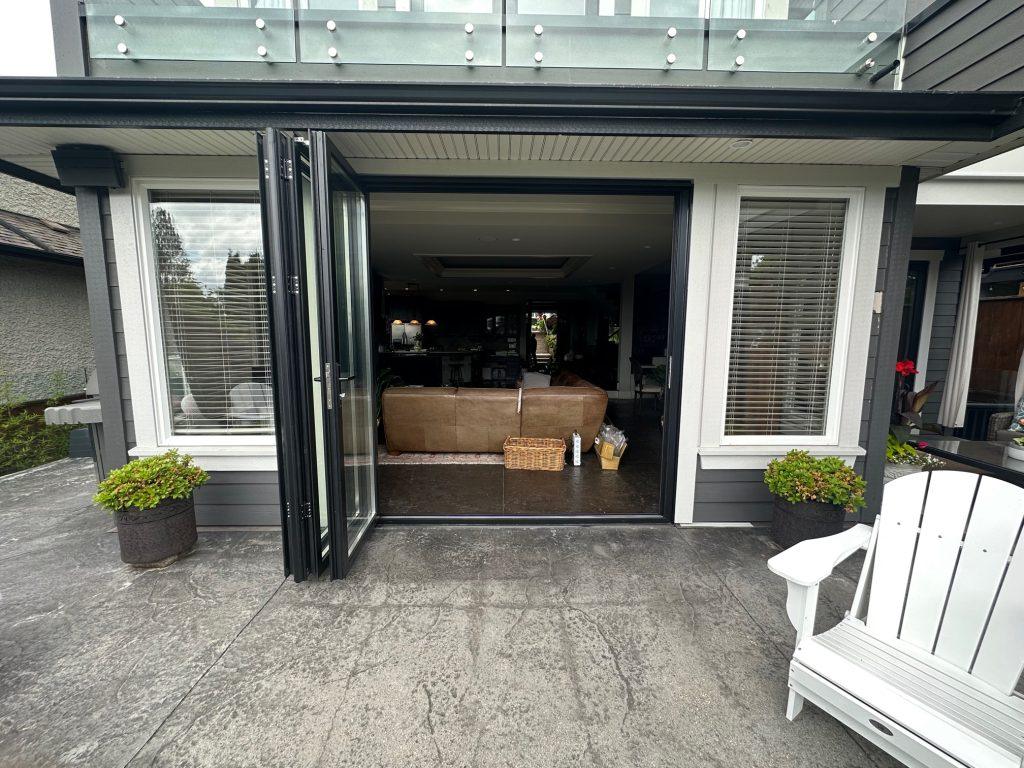
Folding patio doors, also called bifold or accordion doors, consist of hinged glass panels that fold together and stack to one or both sides of the opening. Instead of sliding behind another panel, the sections move together like an accordion.
Multi-slide patio doors use several independent sliding panels. Depending on the design, the panels move along tracks and stack together at one end or slide into a concealed pocket within the wall.
Both systems are designed for larger openings, but they offer different advantages depending on your layout and how you plan to use the space.
| Feature | Folding / Bifold Patio Doors | Multi-Slide Patio Doors |
|---|---|---|
| Opening mechanism | Hinged panels fold together | Panels slide along individual tracks |
| Panel arrangement | Folds and stacks to one or both sides | Stacks at one end or disappears into a pocket, depending on the system |
| Opening potential | Can create a wide, largely unobstructed opening | Can create expansive openings, depending on panel configuration |
| Space requirements | Needs room for folded panels to stack | Needs room for panel stacking or a suitable wall pocket |
| Everyday access | Some configurations include a separate traffic door | Often uses a designated sliding panel |
| Design | Distinctive folding-panel appearance | Clean, continuous glass-panel appearance |
| Best suited for | Homeowners who want a wide opening and flexible indoor-outdoor access | Homeowners who prefer large glass panels and a streamlined sliding operation |
Neither system is automatically better. The right choice depends on the size of the opening, available space, design preferences and how frequently you intend to open the doors.
How Much of the Opening Can You Use?
One of the biggest reasons homeowners consider these systems is the amount of space they can open up.
Folding patio doors
When opened, the panels fold together and move to one or both sides. This can leave a large portion of the opening unobstructed, making folding doors particularly appealing for patios, decks and entertaining areas.
The final opening depends on the number of panels, their configuration and the space available for stacking.
For example, a centre-opening arrangement can divide the panels between two sides, while a one-direction configuration stacks them together at one end.
Multi-slide patio doors
Multi-slide systems also accommodate wide openings, but the panels move horizontally rather than folding together.
Depending on the design, panels can stack at one side or disappear into a pocket built into the wall. Pocket configurations can create an especially clean transition between indoor and outdoor spaces, although they require more planning and suitable wall construction.
Which offers the wider opening?
There is no universal winner. A folding system can provide a substantial clear opening, while a well-designed pocket multi-slide system can achieve a similarly expansive result. The number of panels, stacking arrangement and structural design matter more than the product name alone.
How Much Space Do You Need?
The way each door opens affects the surrounding layout.
Folding doors need a designated area where the panels can stack. Depending on the configuration, this space may be inside or outside the home.
That can influence furniture placement, patio access, nearby walls and the location of railings or outdoor features.
Multi-slide doors generally do not require the same swing or folding clearance. However, the panels still need somewhere to go. A conventional stacking system requires space along the side of the opening, while a pocket system requires a suitable wall cavity.
Before choosing either option, consider:
- Whether furniture or cabinetry sits close to the opening
- Available wall space beside the door
- Patio depth and exterior obstructions
- Whether panels can stack without blocking access
- Whether the existing structure can accommodate a pocket system
A door that looks impressive in a showroom may not be the most practical choice for the actual layout of your home.
Everyday Operation and Accessibility
Large patio doors should work well on ordinary days, not just when you’re entertaining guests.
Folding systems allow several panels to move together, but opening the entire system involves operating multiple hinged sections. Some configurations include a traffic door, which lets you walk outside without folding back every panel.
Multi-slide doors operate by moving individual panels along their tracks. This can make everyday access straightforward, particularly when only one section needs to be opened.
For either system, pay attention to the quality of the rollers, hinges, tracks, locking hardware and handles. Panel weight, opening size and hardware design all influence how smoothly the door operates.
If the door will be used several times a day, try the operating mechanism before making a decision. Ease of use matters just as much as the appearance of the finished installation.

Weather Performance in Vancouver’s Climate
In Vancouver and across the Lower Mainland, patio doors need to handle more than occasional cold weather. Regular rainfall, wind-driven moisture and seasonal humidity make water management an important part of the decision.
Both folding and multi-slide doors can perform well when the product is properly specified and installed. However, neither system should be assumed to be weatherproof simply because of its design.
There are several details worth checking.
Threshold and drainage
The bottom of a large patio door is particularly important in exposed locations.
Ask how the threshold manages water, whether drainage channels are incorporated, and how the sill will connect to the home’s existing weather barrier.
A low-profile or step-free threshold should still have an appropriate drainage and water-management strategy.
Seals and panel connections
Folding systems have multiple hinges, panel connections and weather seals. Multi-slide systems rely on their own track, interlocking panel and perimeter-sealing arrangements.
The performance of either system depends on the design and quality of these components, as well as the installation.
Glass and insulation
The glass specification affects heat loss, comfort and condensation. Low-E coatings, insulated glazing units and suitable spacers can improve thermal performance.
Frame construction also matters. Thermally broken aluminum, for example, helps reduce heat transfer through the frame.
When comparing products, ask for the actual performance specifications of the model you’re considering rather than relying on general claims about the door type.
Installation quality
Even a well-designed patio door can develop problems if the opening is not prepared or sealed correctly.
Proper flashing, sill-pan detailing, drainage and integration with the wall’s weather barrier are especially important for large exterior openings exposed to Vancouver’s rain.
Which System Costs More?
Folding and multi-slide patio doors are custom products in many residential applications. Their final prices depend on more than the number of glass panels.
Factors that influence the cost include:
- Overall opening width and height
- Number and size of panels
- Frame material and finish
- Glass specification and energy performance
- Hardware and locking systems
- Panel stacking or pocket requirements
- Structural modifications to the existing opening
- Removal, preparation, finishing and installation
A pocket multi-slide system may involve additional construction because the wall needs to accommodate the panels. Folding systems can also become more expensive as the number and size of panels increase.
It is therefore difficult to say that one type is always cheaper than the other. The cost depends on the specific configuration and the work required to install it.
For a more detailed look at the factors that affect a patio door project’s budget, see our guide to patio door replacement costs.
When comparing quotes, make sure they cover the same scope of work. Product specifications, glazing, hardware, removal, flashing, finishing and labour should all be considered.
Design and Appearance
Both systems can create a strong architectural feature, but they have a different visual character.
Folding doors create a distinctive series of glass sections that fold together when opened. They can suit homes where the goal is to create a wide opening and a noticeable indoor-outdoor connection.
Multi-slide doors offer a more continuous sliding appearance. With large panels and slim frames, they can work particularly well in contemporary homes where uninterrupted views and clean sightlines are priorities.
Frame material, colour, glass size and hardware all influence the finished look. The best choice is the one that complements the home’s architecture without compromising how the door needs to function.
Maintenance and Long-Term Use
Both systems need regular care, particularly when exposed to outdoor conditions.
For folding doors, pay attention to the hinges, rollers, panel connections and weatherstripping. Keep the tracks clean and check that the panels fold and align smoothly.
For multi-slide doors, keep the tracks free of dirt and debris. Check the rollers, drainage openings, seals and locking hardware as part of routine maintenance.
A few simple habits help either system operate reliably:
- Remove leaves, dirt and debris from tracks.
- Clean the glass and frames using suitable products.
- Check weatherstripping and seals periodically.
- Follow the manufacturer’s instructions for lubricating moving hardware.
- Arrange an inspection if panels become difficult to move or no longer close properly.
The maintenance requirements of a particular system depend on its hardware and construction, so ask the supplier for product-specific care instructions.
Which Patio Door Should You Choose?
The best system depends on how you want to use the opening.
Folding patio doors may be the better choice if:
- You want a wide opening between your living area and patio.
- You like the appearance of folding glass panels.
- You have enough space for the panels to stack.
- You want the option of a separate traffic door.
- Your layout suits a folding-panel configuration.
Multi-slide patio doors may be the better choice if:
- You prefer a clean, continuous glass-panel appearance.
- You want panels to slide rather than fold.
- You have suitable space for panel stacking or a wall pocket.
- You prefer to open only one section for everyday access.
- Your project can accommodate the track and structural requirements of the chosen system.
And what if neither is necessary?
For many homes, a conventional sliding patio door is still a practical solution. It generally needs less space for operation and can provide convenient everyday access without the complexity of a larger multi-panel system.
You can explore our sliding patio doors to see how a more traditional sliding option compares with larger opening systems.
What to Check Before Ordering
Before committing to a folding or multi-slide system, make sure the important details have been addressed.
- Measure the opening: Confirm the width, height and available space around the door.
- Choose the panel arrangement: Understand where each panel will move and stack.
- Check the structure: Determine whether the existing opening needs modification or engineering review.
- Review the glass and frame: Compare glazing, thermal performance and frame construction.
- Plan for water management: Confirm the threshold, drainage and flashing details.
- Check everyday access: Decide whether you need a traffic door or a convenient sliding panel.
- Review the installation scope: Make sure the quote includes preparation, installation, finishing and warranty details.
For condominium and townhouse projects, check strata requirements before ordering. Changes to exterior doors, finishes and building openings may require approval. Permit requirements also depend on the scope of work and the municipality.
Frequently Asked Questions
Are bifold and folding patio doors the same?
The terms are commonly used to describe the same type of system. Bifold or folding patio doors have multiple hinged panels that fold together and stack to one or both sides when opened. Accordion doors is another term often used for this style.
Are multi-slide doors better than bifold doors?
Neither is universally better. Bifold doors fold their panels together, while multi-slide doors move individual panels along tracks. The right choice depends on the opening, available stacking space, design preferences and how you plan to use the door.
Do multi-slide patio doors open completely?
Some configurations allow panels to stack at one side, while pocket systems can move panels into a concealed wall cavity. The amount of clear opening depends on the system’s design and panel arrangement.
Are folding patio doors suitable for Vancouver’s rainy climate?
They can be, provided the selected product has suitable weather seals and glazing and is installed with proper flashing, drainage and threshold detailing. The quality of installation is particularly important in exposed locations.
Do folding and multi-slide patio doors need more maintenance than standard sliding doors?
They can involve more components than a basic two-panel sliding door. Folding systems have multiple hinges and panel connections, while multi-slide systems rely on tracks and rollers. Regular cleaning and product-specific maintenance help keep either system operating smoothly.
Are folding or multi-slide patio doors more expensive?
The price depends on the opening size, number of panels, frame material, glazing, hardware and installation requirements. Pocket systems may also involve additional structural work. A project-specific quote is the best way to compare the two options accurately.
Can I replace my existing patio door with a folding or multi-slide system?
In many cases, it is possible, but the existing opening may need structural modifications. A professional assessment can determine whether the current framing, header and surrounding construction can accommodate the new system.
Find the Right Patio Door for Your Home
Choosing between folding and multi-slide patio doors is not just about which system looks better. It is about finding a design that fits your opening, works with your home’s layout and performs reliably through the changing weather in Vancouver and the Lower Mainland.
At Novin Doors, we help homeowners compare door configurations, materials and installation requirements before choosing a system for their project.
If you’re considering a new patio door, contact Novin Doors to discuss your opening, explore suitable options and arrange a consultation.